Things to Do in Lisbon: Top Attractions, Tips & Costs
There’s a reason Praça do Comércio remains Lisbon’s most photographed square – with a 4.4/5 rating from over 17,300 Tripadvisor (user review platform) reviews, it’s the kind of welcoming space that makes you slow down. But beyond the postcard shots, the city hides affordable tascas, free miradouros, and practical quirks that can make or break your trip, so this guide covers the essential things to do in Lisbon along with honest advice on costs, safety, and whether Porto might suit you better.
Average daily budget (budget traveler): €50–€70 ·
Number of miradouros (viewpoints): over 10 ·
Cost of a pastel de nata: around €1.30
Quick snapshot
- Praça do Comércio is rated 4.4/5 from 17,303 reviews (Tripadvisor) (The Quality Edit (travel lifestyle site))
- Fábrica da Nata specializes in pastéis de nata for morning fuel (Tripadvisor) (The Quality Edit (travel lifestyle site))
- Cais do Sodré is the best area for evening bars and nightlife (Tripadvisor) (The Quality Edit (travel lifestyle site))
- Pink Street is a famous bar-crowded nightlife alley (The Quality Edit (travel lifestyle site))
- Exact tourist numbers for 2025 (no official forecast available)
- Best month to visit (mostly subjective depending on weather tolerance)
- Flixbus from Porto to Lisbon takes about 3 hours and costs €10–15 (Gabby Elisa Substack (personal travel blog))
- Consider a day trip to Sintra (Abroad with Ash (solo travel blog))
- Recommended minimum stay: 3–4 nights Lisbon + 2 nights Porto (Abroad with Ash) (Abroad with Ash (solo travel blog))
Lisbon packs a lot of history and culture into a compact area. Here are the key facts at a glance.
| Attribute | Value |
|---|---|
| Country | Portugal |
| Population | 504,000 |
| Currency | Euro (€) |
| Avg. daily temp in summer | 28°C (82°F) |
What should I not miss in Lisbon?
Top attractions
- Belém Tower and Jerónimos Monastery – both UNESCO World Heritage sites. The tower was built in 1515 to defend the city, and the monastery is a masterpiece of Manueline architecture. (Tripadvisor)
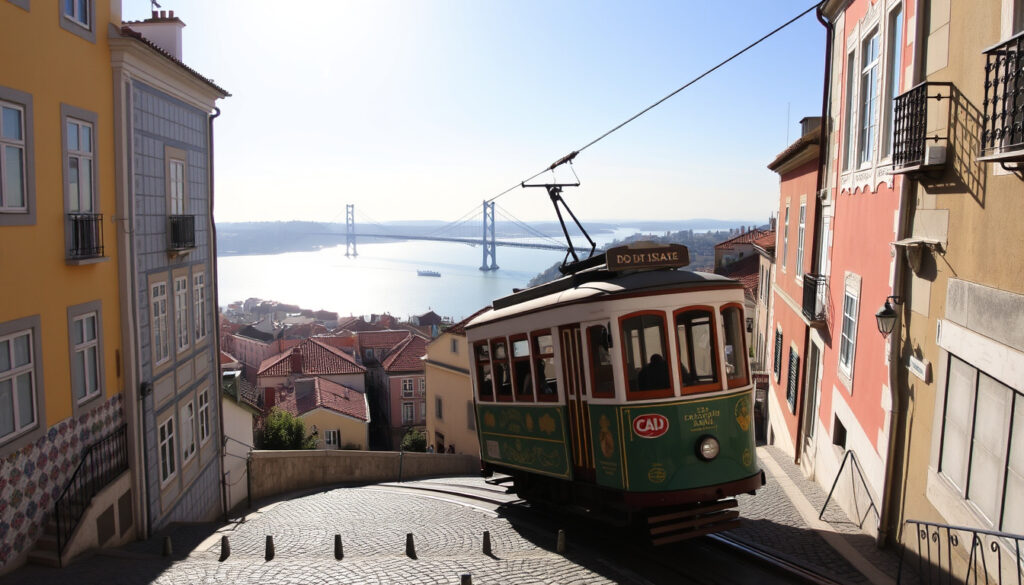
- Tram 28 – the iconic yellow tram that rattles through Alfama, Graça, and Estrela. A single ride costs €2.85 (Tripadvisor)
- Praça do Comércio – the riverfront square that locals call “the living room of Lisbon.” Rated 4.4/5 by thousands of visitors.
- Pastéis de Belém – the original bakery that has been crafting the famous custard tarts since 1837. A tart costs around €1.30.
Unique experiences in Lisbon
- Visit LX Factory, a former industrial complex turned hipster hub with boutiques, galleries, and food markets (The Quality Edit)
- Take in the view from a miradouro – viewpoints like Miradouro da Senhora do Monte and Miradouro de São Pedro de Alcântara are free and offer postcard panoramas.
Family-friendly activities
- Oceanário de Lisboa – Europe’s largest indoor aquarium with a 4-million-liter main tank. Great for kids.
- Hop-on hop-off bus tours – practical for covering hills with little legs.
Romantic things to do
- Sunset at Jardim do Morro in Vila Nova de Gaia (across the river) – though technically Porto, the view of Lisbon’s skyline is magical (The Quality Edit)
- Dinner in the Bairro Alto streets – candlelit tables and fado music.
The implication: even a short visit can deliver a rich experience if you focus on the neighborhoods that define the city.
Is Lisbon expensive?
Average daily budget
- Budget traveler: €50–70/day (hostel, street food, public transport).
- Mid-range traveler: €110–140/day (hotel, three meals, a few drinks) (Embrace Someplace (travel cost comparison blog))
How Lisbon compares to other European capitals
- Lisbon is cheaper than London, Paris, and Amsterdam but more expensive than Porto (Embrace Someplace)
- A meal in a local tasca (small eatery) can cost under €15, with a glass of vinho verde included (Embrace Someplace)
Money-saving tips
- Buy a Viva Viagem card for public transport – a single metro or tram ride costs €1.65 (loaded card).
- Eat pastéis de nata from a bakery rather than a sit-down café – they cost €1.30 instead of €3–4.
- Visit free miradouros and free museums (e.g., Museum of Lisbon on Sunday mornings).
The pattern is clear: Lisbon remains accessible for most Western European budgets, especially compared to other capitals.
What to avoid in Lisbon?
Pickpocketing hotspots
- Tram 28 – crowded trams are prime ground for pickpockets. Keep your bag zipped and in front of you (Abroad with Ash)
- Rossio Square and Praça do Comércio – busy squares attract street-level theft.
Areas to avoid at night
- Alfama’s narrow, unlit alleys after midnight – stick to main streets or take a taxi (Abroad with Ash)
- Some parts of Intendente can feel sketchy late at night; use Uber or Bolt instead of walking.
Tourist scams
- Overpriced restaurants near major squares – check prices before sitting. A menu with €25 for a simple steak is a red flag.
- “Free” port wine tastings – some shops push hard-sell tactics.
- Bracelet scams – people approach you in touristy areas, tie a bracelet on your wrist, then demand payment.
Do’s and don’ts for travelers
- Don’t wear shorts or sleeveless tops inside churches – cover shoulders and knees.
- Do greet shopkeepers with “Bom dia” before asking a question.
- Do ask for the “prato do dia” (daily special) – it’s often the best value.
What this means: Lisbon’s safety reputation holds up well, but awareness of these few hotspots keeps your trip smooth.
What is nicer, Porto or Lisbon?
The Lisbon versus Porto debate often comes down to priorities. Here is how they stack up.
| Category | Lisbon | Porto |
|---|---|---|
| Cost (mid-range daily) | €110–140 | €90–110 (Embrace Someplace) |
| Accommodation (mid-range) | €120–180/night | €80–130/night (Embrace Someplace) |
| Nightlife | Lively, clubs and bars (Cais do Sodré, Pink Street) | More relaxed, port wine lodges (Abroad with Ash) |
| Day trips | Sintra, Cascais, Cabo da Roca | Douro Valley, Guimarães, Braga |
| Safety perception | More pickpocket reports in tourist zones | Generally safer, more walkable (Abroad with Ash) |
Culture and attractions
- Lisbon has more museums (over 30) and a bigger variety of attractions.
- Porto feels more traditional and compact; its historic center is a UNESCO gem.
Cost of living
- Porto is about 15–20% cheaper than Lisbon for accommodation and dining.
- A meal in a tasca in Porto costs €7–9 per dish, while in Lisbon it’s €10–15.
Nightlife
- Lisbon wins for live music, international DJs, and late-night bars.
- Porto offers intimate fado houses and port wine tastings after dinner.
Day trips
- From Lisbon: train to Sintra (40 minutes) for fairy-tale palaces.
- From Porto: Douro Valley wine tours by train or boat.
Lisbon delivers bigger-city energy and more attractions, but Porto offers a quieter, cheaper alternative. If you’re after nightlife and museums, pick Lisbon. For romance and wine, Porto steals the show.
The catch: choosing between them depends less on objective quality and more on whether you want city energy or relaxed charm.
Is 3 days in Lisbon too long?
Sample 3-day itinerary
- Day 1: Belém (tower, monastery, pastéis de nata) → Jerónimos Monastery → evening in Cais do Sodré.
- Day 2: Tram 28 to Alfama → São Jorge Castle → miradouro at Graça → night at a fado show.
- Day 3: LX Factory → Bairro Alto for shopping and lunch → free afternoon for a day trip to Sintra (if time allows).
Day trips from Lisbon
- Sintra – 40 minutes by train; visit Pena Palace and Quinta da Regaleira.
- Cascais – seaside town with beaches and a marine promenade.
- Évora – for a deeper Alentejo experience (90 minutes by bus).
When to visit
- March–May and September–October offer mild weather and fewer crowds.
- July–August are peak months; hotels cost 30% more and queues are long.
The implication: three days hits the sweet spot for first-timers without overstaying the city’s main attractions. Lisbon vs Porto: Budget, Safety & Itinerary Comparison can help you decide how to split your time.
Upsides
- One of the most affordable capital cities in Western Europe
- Rich cultural mix: fado, pastéis de nata, tile art
- Excellent public transport network (metro, trams, buses)
- Friendly locals and safe overall
Downsides
- Hill walking can be exhausting; wear comfortable shoes
- Pickpocketing on busy public transport
- Accommodation prices are rising fast
- Not ideal for a strictly beach holiday (beaches require a short train ride)
“The best views aren’t on any tourist map. Walk up to Miradouro da Graça at sunset – that’s where locals watch the sun drop behind the Tagus.”
— Local tour guide, Lisbon Walking Tours
“Porto feels like a smaller, quieter Lisbon. It’s cheaper, safer, and the port wine cellars are unforgettable. If you have only three days, I’d still pick Lisbon for its energy.”
— Solo travel blogger, Abroad with Ash
So which is it – Lisbon or Porto? The answer depends on your style. Lisbon rewards the curious with its hills, tiles, and nonstop activity. Porto offers intimacy, lower costs, and world-class wine. For most first-time visitors to Portugal, a split itinerary (3 nights Lisbon, 2 nights Porto) gives you the best of both worlds without burning out. For the budget-conscious traveler, the decision is clear: if you want museums and nightlife, stay in Lisbon; if you prefer walkable charm and wallet-friendly meals, Porto wins. Our Lisbon travel guide offers more detailed itineraries for each neighborhood.
For even more recommendations, check out another detailed Lisbon guide that covers additional itineraries and insider tips.
Frequently asked questions
How do I get from Lisbon airport to the city center?
The metro (red line) runs directly from the airport to downtown in about 20 minutes for €1.65. Taxis and Uber cost €15–25.
What is the best time of year to visit Lisbon?
March to May and September to October offer mild temperatures (20–25°C) and fewer tourists. Summer (June–August) is hot and crowded.
Do I need to tip in Lisbon?
Tipping is not mandatory but appreciated. Rounding up the bill or leaving 5–10% at sit-down restaurants is common.
Can I drink tap water in Lisbon?
Yes, tap water is safe to drink. Many locals drink it. Bottled water is cheap if you prefer.
What is the dress code for churches in Lisbon?
Cover shoulders and knees. Avoid shorts and sleeveless tops inside churches. Most provide shawls at the entrance.
Is Lisbon safe for solo female travelers?
Yes, generally safe. Use the same common sense as in any big city: avoid empty streets at night, keep valuables hidden, and stay in well-lit areas.
How many days in Lisbon are enough?
Three days gives you time for the main attractions, a miradouro sunset, and one day trip (e.g., Sintra). Two days is doable but rushed.
More related posts
 Birthday Message to a Friend: Best Wishes & Ideas
 Lobster Mac and Cheese Recipe: Cheese, Lobster & Serving Tips
 Shawn Jackson Funeral Home | St. Thomas ON Obituaries & Services
 Sarah Michelle Gellar: Biography, Family, Career & Updates
 Jensen Huang: Biography, Net Worth, and Key Facts
 Post Malone: Real Name, Irish Roots, Nickname & Health
 Stephenson 2-18: Largest Known Star Size, Facts & Comparisons
 The Brilliant Healer’s New Life – Plot, Characters and Releases Guide