My Time at Sandrock: Sequel, Playtime & Romance Guide
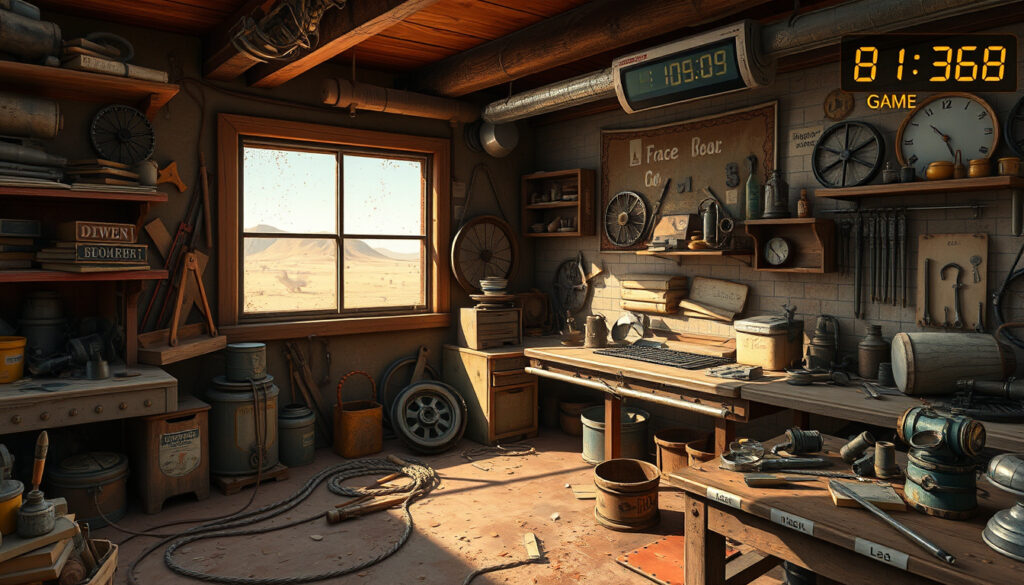
Anyone who’s spent a few dozen hours in My Time at Portia knows the pull: a post-apocalyptic world where you rebuild with a crafting bench. My Time at Sandrock drops that recipe into a desert, trading green valleys for scarce water and deeper machine-based manufacturing, with a main story stretching 80–100 hours according to HowLongToBeat. This guide lays out what’s new, what’s different, and whether Sandrock is the right desert for you.
Developer: Pathea Games ·
Release year: 2023 ·
Platforms: PC, PS5, Xbox Series X|S, Switch, Mobile ·
Average playtime: 80–100 hours (main story) ·
Genre: Farm life sim / RPG ·
Metacritic score: 81 (PC)
Quick snapshot
- Standalone sequel in the same universe (Wikipedia (community encyclopedia))
- Same-sex romance and marriage available (Queerly Represent Me (LGBTQ+ representation database))
- Average main-story completion: 80–100 hours (HowLongToBeat (player-submitted data platform))
- Full release November 2, 2023 (Steam store page (official game store))
- Exact total romanceable NPCs per platform not confirmed in a single authoritative source
- Mobile release date not officially announced as of early 2025
- Impact of “woke” criticism on sales not documented in public data
- Community opinions vary on which game is better overall, with some preferring Portia’s completeness and others Sandrock’s improvements
- Early Access launched May 2022 (Steam Community discussion (player forum))
- Full PC release November 2, 2023 (Steam store page (official game store))
- Console releases followed through early 2024 (Steam Community discussion (player forum))
- Mobile (iOS/Android) version announced for 2024/2025
- Post-launch updates and DLC anticipated
The 8 key specifications below follow a consistent pattern: Sandrock is a larger, more narrative-driven experience than Portia.
| Attribute | Value |
|---|---|
| Developer | Pathea Games |
| Publisher | PM Studios, Focus Entertainment |
| Release date | November 2, 2023 (PC), later on consoles |
| Platforms | Windows, macOS, PlayStation 5, Xbox Series X/S, Nintendo Switch, iOS, Android |
| Average playtime (main story) | 80–100 hours (HowLongToBeat) |
| Metacritic score | 81/100 (PC) (Metacritic (review aggregator)) |
| Romanceable NPCs | Over 12 characters |
| LGBTQ+ options | Yes, same-sex marriage available (Queerly Represent Me) |
What is the difference between My Time at Portia and My Time at Sandrock?
Setting and atmosphere
Portia’s green, river-filled valley gave way to the arid, rocky expanse of Sandrock. The shift isn’t cosmetic — water management becomes a core mechanic, and the scarce resource shapes everything from farming to crafting. Some players miss Portia’s “nicer view,” but the desert brings a distinct identity.
Sandrock’s desert setting forces players to think about water as a resource layer, adding depth to the crafting loop but also a tension that cozy purists may find less relaxing.
Gameplay loop and crafting depth
Both games let you run a workshop, complete commissions, and explore ruins. But Sandrock adds a skill tree with four categories — Gathering, Workshop, Combat, and Social — allowing specialization. Manufacturing chains are longer: you’ll build conveyor belts, advanced furnaces, and mechanical assemblers. Portia’s simpler progression feels tighter for casual sessions.
Story and character development
Sandrock offers full voice acting for main quests, companion quests that evolve relationships, and a more cohesive narrative linking the town’s survival to your workshop output. Portia’s story is lighter, relying more on text dialogue and fetch-quest patterns.
Graphics and performance improvements
Built on a newer version of the engine, Sandrock features improved lighting, more detailed environments, and better character models. Early Access impressions highlighted the visual leap even before the full release. Performance on Switch and mobile remains a point of debate, with some reports of frame drops in dense areas.
The implication: Sandrock is the richer, more ambitious game, but Portia’s tighter, more straightforward loop may better suit players with limited time or who prefer a simpler cozy rhythm.
Is My Time at Sandrock a sequel to Portia?
Storyline connection between the two games
Sandrock and Portia share the same post-apocalyptic universe, set about 300 years after the “Day of Calamity” that wiped out modern technology. You play a new character arriving in a different settlement — no save-data transfer, no returning protagonist.
Shared universe and timeline
Both games are developed by Pathea Games, and the lore is consistent: the same rebuilding world, same factions, same history. A player discussion puts it plainly: “It’s a new story in the same world, not a direct sequel.”
Developer statements on franchise continuity
Pathea Games has described Sandrock as a “standalone advance” in the series, not requiring prior knowledge of Portia. The design intent is to welcome newcomers while rewarding series fans with callbacks and expanded mechanics.
The pattern: Sandrock is a sequel in setting only — functionally, it’s a spiritual successor with a fresh slate.
How many hours is My Time at Sandrock?
Main story completion time
According to player-submitted data on HowLongToBeat, the main campaign averages between 80 and 100 hours. That’s roughly double Portia’s 40–60 hour main story.
Full completion with all side content
Completionists who pursue every romance, commission, and collectible can easily exceed 150 hours. Sandrock’s expanded post-game content — including a harder difficulty mode and additional commissions — adds further longevity.
Factors that affect playtime
Your efficiency in building and crafting directly influences speed. Players who optimize workshop chains and commission routing can trim 10–20 hours; those who meander through exploration and socializing will stretch to the high end. Early Access analyses noted that the Early Access build already offered 40+ hours of content.
What this means: Sandrock demands a time investment closer to a AAA RPG than a typical cozy sim. If you have 60 hours total, Portia may be a more manageable entry point.
Is My Time at Sandrock woke?
LGBTQ+ representation in the game
Sandrock includes same-sex romance and marriage options — a feature documented by Queerly Represent Me. Players can pursue any of the 12+ romanceable characters regardless of their own character’s gender.
Player romance options and gender inclusivity
The game doesn’t gate romance behind gender. Character designs avoid overt sexualization, focusing instead on personality and backstory. Some players on Steam Community forums have debated whether this constitutes “wokeness” — but the developer’s approach is clearly inclusive by design, not politicized.
Developer approach to social themes
Pathea Games has not positioned Sandrock as a political statement. The same-sex marriage option exists as an organic part of the relationship system, not as a highlighted feature.
The “woke” label is applied by a vocal minority; for the vast majority of players, Sandrock’s inclusive design is a normal feature of a modern life sim, comparable to Stardew Valley or The Sims.
The catch: no public sales data exists to measure whether the inclusive design hurt or helped adoption — the debate remains largely confined to forum threads.
Can you have a baby in My Time at Sandrock?
Parenting mechanics in the game
Yes — after marrying a romanceable NPC, players can pursue a questline that leads to having a child. According to the Fandom Wiki, the child appears as a non-playable character in your home, with limited interaction (e.g., basic dialogue, walking animations).
How to start a family
You must first reach a high relationship level with a spouse, then trigger a side quest. The process takes several in-game days. Notably, same-sex couples can also have a child — the game does not impose biological restrictions.
Impact on gameplay and story
Children are mostly cosmetic — they don’t join you on commissions or improve your workshop. Some players consider this a missed opportunity, hoping future updates will add deeper family mechanics.
The trade-off: parenting exists as a reward for relationship investment, but it won’t change how you play the game. If you want a generative family system (like in Stardew Valley Expanded mods), Sandrock’s version may feel thin.
Is My Time at Sandrock a cozy game?
Cozy game criteria: low pressure, customization, relationships
Sandrock ticks most boxes: no hard time limits on commissions, adjustable difficulty, extensive character customization, and deep relationship-building. The cozy game community frequently recommends it alongside Stardew Valley and Coral Island.
Comparison to Stardew Valley and other cozy titles
Unlike Stardew Valley’s pure low-pressure vibe, Sandrock includes combat (though optional) and a time system that can feel rushed during the first few in-game weeks. However, players can slow down by adjusting game speed settings. One analysis notes that Sandrock’s “cozy feel” depends heavily on player willingness to ignore the main quest pressure.
Player community perception on platforms like Reddit and Facebook
Positive sentiment dominates: Sandrock is commonly described as “relaxing” and “wholesome.” But some users caution that the desert atmosphere and complex machinery can be less visually soothing than Portia’s greenery.
Why this matters: Sandrock is a cozy game with caveats. It’s ideal for players who like cozy systems but don’t mind occasional challenge; purists may prefer more passive farming sims.
Is My Time at Sandrock similar to Stardew Valley?
Core gameplay mechanics compared
Both games share farming, crafting, mining, foraging, fishing, and relationship building. Sandrock adds a full workshop manufacturing system, vehicles (mechas), and a more structured plot with voiced cutscenes. Stardew Valley’s pixel art and minimalist scope contrast with Sandrock’s 3D open world and higher system complexity.
Differences in setting, story, and scope
Stardew Valley is small-town agricultural life with light RPG elements; Sandrock is a post-apocalyptic builder with a narrative arc.
Which game is better for different player preferences
The 3 player types below show a clear pattern: Sandrock wins for depth and story, Stardew for purity and simplicity.
| Player type | Better choice | Key reason |
|---|---|---|
| Pure cozy relaxation | Stardew Valley | Lower time pressure, simpler mechanics |
| Story + crafting depth | Sandrock | Full voice acting, complex production chains |
| LGBTQ+ inclusivity desired | Sandrock | Same-sex marriage available from the start (Stardew needed update) |
For the player who values narrative and mechanical depth over rustic simplicity, Sandrock is the stronger investment. Stardew remains the genre’s gold standard for accessibility and modding support.
Confirmed Facts and What Remains Unclear
Confirmed facts
- Sandrock is a standalone sequel set in the same universe as Portia (Wikipedia).
- Same-sex romance and marriage are available (Queerly Represent Me).
- Main story average playtime is 80–100 hours (HowLongToBeat).
- Players can have a child after marriage (Fandom Wiki).
What’s unclear
- Exact number of romanceable NPCs per platform (not universally confirmed in a single authoritative source).
- Full mobile release date has not been officially announced as of early 2025.
- Impact of “woke” criticism on sales or player adoption is not documented in available public data.
- Community opinions vary on which game is better overall, with some preferring Portia’s completeness and others Sandrock’s improvements.
“My Time at Portia is great and more complete, but Sandrock is newer and better in most ways.”
Steam Community (player discussion)
“The game is considered a standalone sequel — you don’t need to play Portia to understand Sandrock.”
Wikipedia (community encyclopedia)
Sandrock isn’t a simple Portia reskin — it’s a more sprawling, narrative-heavy, and mechanically intricate game. For those who loved Portia’s formula but craved more depth, it delivers. For newcomers, it offers a complete experience without requiring homework. But the time commitment is real: 80+ hours is a serious ask for players used to 30-hour cozy loops. For the player weighing Sandrock against Portia (or Stardew), the choice is clear: choose Sandrock if you want a meatier story and deeper crafting, or choose Portia/Stardew if you prefer a tighter, quieter, more relaxed rhythm.
youtube.com, youtube.com, mytimeatportia.fandom.com, steamcommunity.com, youtube.com, youtube.com
Fans of the series may also enjoy our comprehensive My Time at Portia guide, which covers romance and workshop mechanics in the original game.
Frequently asked questions
Is My Time at Sandrock available on Nintendo Switch?
Yes, the Nintendo Switch version released in December 2023, though performance may be less smooth than on PC or current-gen consoles.
What platforms can I play My Time at Sandrock on?
Windows, macOS, PlayStation 5, Xbox Series X/S, Nintendo Switch, iOS, and Android (mobile versions announced for 2024/2025).
Does My Time at Sandrock have multiplayer or co-op?
No, Sandrock is a single-player game. The developer has not announced multiplayer plans for this title.
Is My Time at Sandrock part of the My Time series?
Yes, it is the second major release after My Time at Portia, set in the same post-apocalyptic universe.
How long does it take to beat My Time at Sandrock?
The main story averages 80–100 hours according to HowLongToBeat; completionist runs can exceed 150 hours.
Can you customize your character in My Time at Sandrock?
Yes, extensive character customization is available, including gender, appearance, and outfit choices.
Is there a demo for My Time at Sandrock?
A free demo was available on Steam during Steam Next Fest events, but it is no longer offered as of the full release.
More related posts
 Seargeoh Stallone: What Happened to Sylvester Stallone’s Son
 Things to Do in Old Montreal: Attractions, Free Activities & More
 France D’Amour Biography: Songs, Net Worth & 2025 Album Symbiose
 Best Beaches in Australia: White Sand, Blue Water & More
 Can Dogs Eat Cinnamon? Safety, Risks & Dosage Guide
 2 Weeks Notice Letter: Template, Sample & How to Write
 Dave Foley: Biography, Career, and Personal Life
 Mickey Rooney: Life, Legacy, and Financial Collapse