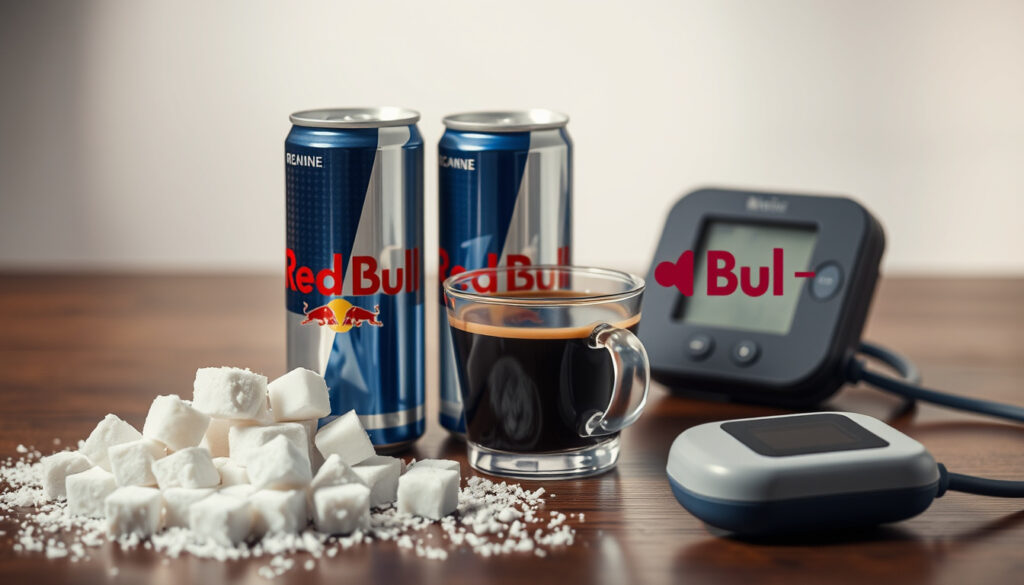
Is Red Bull Healthy? Caffeine, Sugar, and Risks
Red Bull is one of the most recognized energy drinks on the planet, but what does it actually deliver beyond the marketing? The answer is more nuanced than the slogan suggests, and the health effects depend a lot on how much and how often you drink it.
Caffeine per 250 ml can: 80 mg ·
Sugar per 250 ml can: 27 g ·
Calories per 250 ml can: 110 kcal ·
Global market share: 13% ·
Year founded: 1987 ·
Owner: Red Bull GmbH
Quick snapshot
- Red Bull contains 80 mg of caffeine and 27 g of sugar per 250 ml can Red Bull official ingredient list
- It is non‑alcoholic by US federal standards (< 0.5% ABV) FDA alcohol labeling rules
- EFSA says 400 mg of caffeine per day is safe for healthy adults EFSA caffeine safety advice
- Long‑term health effects of daily consumption are not well studied Harvard Health energy drink risks
- Whether taurine adds meaningful benefit beyond caffeine is debated PubMed Central caffeine safety review
- Impact of artificial sweeteners in sugar‑free versions lacks long‑term data (Harvard Health energy drink risks)
- Red Bull launched in 1987 and now holds ~13% of the global energy drink market Wikipedia market data
- Germany capped energy drinks at 320 mg/L caffeine German BfR caffeine regulation
- Health Canada set a maximum of 180 mg of caffeine per serving for energy drinks Health Canada energy drink rules
- More countries may tighten caffeine limits as consumption rises among teens
- Sugar‑free and zero‑calorie variants are gaining shelf space
- Regulatory reviews on taurine and other additives are ongoing in the EU
Six key facts about Red Bull, one pattern: the numbers are moderate on their own but the sugar content uses up more than half the daily limit in a single can.
| Attribute | Value |
|---|---|
| Caffeine per 250 ml | 80 mg |
| Sugar per 250 ml | 27 g |
| Calories per 250 ml | 110 kcal |
| Global market share | 13% |
| Founded | 1987 |
| Owner | Red Bull GmbH |
Is Red Bull a healthy energy drink?
Health claims and controversies
- One 250 ml can of original Red Bull contains 27 g of added sugar — 54% of the daily limit recommended by the Dietary Guidelines for Americans Mayo Clinic Health System added sugar warnings
- The caffeine level (80 mg) is about the same as a standard cup of filter coffee and sits well below the 400 mg safe limit for healthy adults EFSA caffeine safe intake
- Red Bull contains taurine (1000 mg per can) and B vitamins, but no independent, peer‑reviewed research has shown these add significant health benefit beyond the caffeine PubMed Central taurine review
For a healthy adult, one can of Red Bull is unlikely to cause harm. But the sugar content makes it hard to justify as a daily habit — one can eats up over half your added‑sugar allowance, leaving little room for anything else.
Nutritional profile overview
- Calories: 110 kcal from sugar (not fat)
- Sugars: 27 g (sucrose and glucose)
- Caffeine: 80 mg
- Taurine: 1000 mg
- B vitamins: B3 (niacin), B5 (pantothenic acid), B6, B12
The pattern: the macro numbers are moderate, but the sugar density is high for a beverage. A 250 ml serving contains 6.75 teaspoons of sugar — that’s more than a glazed donut.
What this means: Red Bull can fit into an otherwise healthy diet occasionally, but it’s not a “health drink.” The sugar content alone disqualifies it for regular daily use when the Dietary Guidelines for Americans recommend limiting added sugar to 50 g per day Mayo Clinic Health System added sugar guidance.
What exactly does Red Bull do?
Mechanism of action: caffeine and taurine
- Caffeine blocks adenosine receptors in the brain, reducing the feeling of fatigue Harvard Health how caffeine works
- Taurine is an amino acid that may improve mental focus and support heart function, though human studies are limited PubMed Central taurine effects
- B vitamins in Red Bull aid in energy metabolism, converting food into usable energy
Effects on alertness and physical performance
- Typical effects on alertness begin within 15–30 minutes and last 4–6 hours Red Bull product page
- A 2017 systematic review found that caffeine at levels present in energy drinks improves reaction time and attention PubMed Central caffeine and cognition
- Athletes sometimes use it for a pre‑workout energy boost, but the sugar can also cause a mid‑session energy crash Harvard Health energy drink crash
The effects are real, but they come with a sugar spike. For short bursts of mental work, the caffeine and sugar combination can help. For sustained physical effort, the subsequent blood‑sugar dip can hurt performance.
The catch: The benefit is mostly caffeine. Taurine and B vitamins are marketed as differentiators, but the evidence that they add independent benefit is weak. Consumers are essentially paying for a caffeine delivery system with a side of sugar.
What are the benefits of Red Bull?
Short‑term performance boost
- Studies show improved reaction time, alertness, and subjective energy within 30 minutes PubMed Central cognitive effects
- Used by athletes as a pre‑workout drink; the sugar provides quick glucose for muscle energy
- Sugar‑free option available for those who want caffeine without the calorie load Red Bull sugar‑free variants
Convenience and availability
- Sold in over 170 countries through convenience stores, supermarkets, and vending machines
- Comes in resealable cans and a variety of sizes
- The brand is consistently associated with extreme sports and high‑energy lifestyle marketing
Why this matters: For someone who needs a quick pick‑me‑up on a long drive or during a late‑night study session, Red Bull works. But the energy is borrowed — it relies on sugar and caffeine, not nutrition. Relying on it daily creates a cycle of alertness and crash.
Is Red Bull alcohol or not?
Alcohol content regulations
- Red Bull is classified as a non‑alcoholic beverage by the US Food and Drug Administration, containing less than 0.5% alcohol by volume FDA alcohol content labeling
- No ethanol is added as an ingredient; the trace alcohol is a natural by‑product of fermentation in the ingredients
- Similar regulations apply in the EU, where energy drinks must stay below 0.5% ABV
Common misconceptions
- Confusion arises because Red Bull is frequently mixed with vodka or other spirits NSW Health energy drink mixers
- The drink itself cannot cause intoxication — that requires alcohol
The implication: Red Bull is not alcoholic, period. The reputation comes from cocktail culture, not the product itself. That said, mixing energy drinks with alcohol can mask the feeling of intoxication, leading to riskier drinking — a separate concern NSW Health energy drinks and alcohol.
Is drinking 1 Red Bull a day okay?
Daily caffeine and sugar limits
- The EFSA says 400 mg of caffeine per day is safe for healthy adults — one can (80 mg) fits easily EFSA caffeine safe intake
- But the 27 g of added sugar in one can exceeds 50% of the 50 g daily limit recommended by the US Dietary Guidelines Mayo Clinic Health System added sugar guidance
- Health Canada limits energy drink servings to 180 mg of caffeine, so a single Red Bull is well under that cap Health Canada caffeine limit
Potential health risks of regular consumption
- Acidic pH (~3.4) can erode tooth enamel over time if sipped slowly Harvard Health dental erosion
- Frequent sugar intake may contribute to metabolic syndrome, weight gain, and insulin resistance Mayo Clinic Health System metabolic risks
- Can cause sleep disruption, jitters, and anxiety in caffeine‑sensitive people NSW Health energy drink side effects
One pattern among the numbers: caffeine is fine, sugar is not. Drinking one can a day — and cutting out other added sugars — is possible, but in practice few people do that. The cumulative effect of regular consumption is what raises the risk.
The trade-off: A daily Red Bull is a daily dose of 27 g of added sugar. Over a year, that’s about 10 kg of pure sugar. Even if the caffeine stays safe, the sugar load can strain metabolic health.
Nutritional specifications of Red Bull (250 ml)
The numbers behind the can — a side‑by‑side look at what one serving delivers and how that compares to regulatory limits.
| Component | Amount per 250 ml | % of daily limit (if applicable) |
|---|---|---|
| Caffeine | 80 mg | 20% of EFSA’s 400 mg safe limit |
| Sugar | 27 g | 54% of US Dietary Guidelines 50 g limit |
| Calories | 110 kcal | 5–6% of a 2000 kcal diet |
| Taurine | 1000 mg | No established daily limit |
| Niacin (B3) | 6.5 mg | 46% of RDA for adults |
| Pantothenic acid (B5) | 2.5 mg | 50% of RDA |
| Vitamin B6 | 0.9 mg | 69% of RDA |
| Vitamin B12 | 2.5 µg | 104% of RDA |
What this means: The caffeine is moderate, the sugar is high. The B vitamins are a marketing bonus that most people get enough of from food. Taurine has no established upper limit, but its benefit remains unproven in the amounts present.
Upsides and downsides of Red Bull
Upsides
- Quick mental and physical boost from caffeine and sugar
- Moderate caffeine level (80 mg) is safe for most adults
- Sugar‑free version available for those avoiding sugar
- Convenient, widely available, well‑known brand
Downsides
- High added sugar (27 g) per can
- Acidic pH can erode teeth over time
- May cause jitters, anxiety, or sleep disruption in sensitive people
- Lack of long‑term independent health studies on regular consumption
What’s clear and what’s unclear
Confirmed facts
- Red Bull is non‑alcoholic FDA alcohol labeling
- Contains caffeine, taurine, B vitamins, and sugars Red Bull ingredients
- Provides short‑term alertness and energy Harvard Health energy drink effects
- Widely available in over 170 countries Wikipedia global presence
What’s unclear
- Long‑term health effects of daily consumption (no robust longitudinal studies)
- Whether taurine provides unique benefit beyond caffeine PubMed Central taurine review
- Impact of artificial sweeteners in sugar‑free versions over decades
Expert perspectives on Red Bull
Red Bull holds approximately 13% of the global energy drink market, making it one of the largest energy drink brands in the world.
Red Bull gives you wings.
Red Bull GmbH brand slogan
Beverages containing less than 0.5% alcohol by volume are not considered alcoholic and may be marketed as non‑alcoholic.
FDA non‑alcoholic definition
Two facts stand out from these perspectives: the brand’s global reach is enormous, and regulatory agencies uniformly treat it as a non‑alcoholic beverage. The “gives you wings” tagline may be marketing hyperbole, but the functional effects — caffeine lift, sugar energy — are real.
Summary
Red Bull is an effective short‑term energy drink that delivers 80 mg of caffeine and 27 g of sugar per 250 ml can. Its caffeine level is safe for most healthy adults, but the sugar content exceeds half the recommended daily limit. For occasional use — a late‑night drive, a study session, a pre‑workout jolt — it works fine. For daily drinkers, the cumulative sugar load, dental acidity, and potential sleep disruption make it a poor habit. For the health‑conscious consumer, the choice is clear: enjoy it rarely, or switch to a sugar‑free version and still watch your overall caffeine intake.
Frequently asked questions
Can Red Bull cause heart palpitations?
Yes, in some people. Caffeine is a stimulant, and high doses can trigger palpitations in sensitive individuals or those with underlying heart conditions. The 80 mg in one can is moderate, but if you are prone to arrhythmias, consult a doctor.
Is Red Bull safe for teenagers?
Health authorities recommend caution. The American Academy of Pediatrics advises that adolescents avoid energy drinks because of the high sugar and caffeine content. A single can may be too much for a younger, smaller body.
What is the difference between Red Bull and Monster?
Both are energy drinks, but Monster typically contains more caffeine (160 mg per 16 oz can vs. 80 mg in 8.4 oz Red Bull) and often has more sugar. Red Bull is smaller and more portable; Monster is larger and tends to be marketed more aggressively.
Does Red Bull help with hangovers?
No. The caffeine may mask fatigue, but it does not speed up alcohol metabolism. Drinking Red Bull during or after alcohol consumption can delay the feeling of intoxication, leading to risky drinking, and does not cure a hangover.
Can you drink Red Bull before exercise?
Yes, many athletes do for a short‑term energy boost. The caffeine and sugar can enhance performance in moderate‑duration exercise. However, the sugar may cause a blood‑sugar drop later, and the carbonation might cause stomach discomfort.
Is sugar‑free Red Bull healthier than regular?
By removing the 27 g of sugar and 110 calories, sugar‑free Red Bull is a better choice for those watching sugar or calorie intake. But the caffeine, acidity, and artificial sweeteners still need consideration. It’s less unhealthy, but not a health drink.
How long does the effect of Red Bull last?
Onset of alertness starts within 15–30 minutes, peaks around 45–60 minutes, and typically lasts 4–6 hours. The sugar spike is shorter, while caffeine’s half‑life is about 5 hours in most adults.
More related posts
 Kylie Cantrall: Age, Boyfriend, Ethnicity, and Rise to Fame
 Coffee Meets Bagel 2025: Still Active, Worth, and User Ratio
 CAD to Turkish Lira: Current Rate, History & Forecast
 Quentin Tarantino: His 10 Films, Oscars, and Controversies
 San Vito Lo Capo: Sicily’s Premier Beach Destination
 Telus Health Provider Login – Step-by-Step Access Guide
 Jesus Christ: Surprising Answers to 5 Common Questions
 Bryan Johnson Net Worth 2025 and Anti-Aging Blueprint