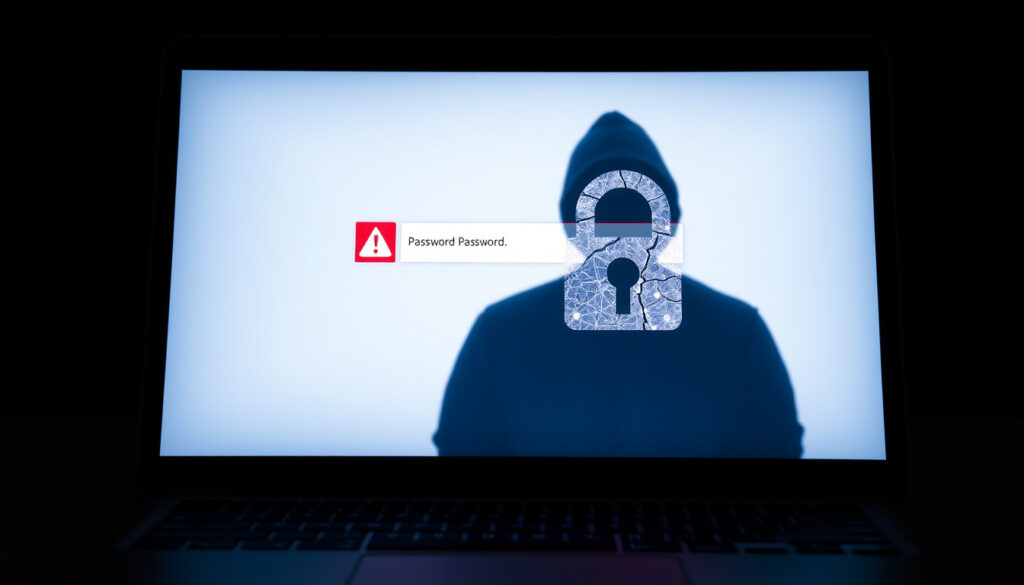
Amazon Account Attackers Warning: Latest Verified Info 2025
Despite Amazon’s own security measures, the company and the FBI issued a rare joint warning about a surge in account takeover attacks targeting holiday shoppers. Here’s what you need to know to keep your account safe and spot the scams before they hit.
Customers warned: 220 million · Warning date: November 26, 2025 · Issuing authorities: Amazon and FBI · Attack type: Account takeover and impersonation scams · Targeted period: Holiday shopping season
Quick snapshot
- Amazon and FBI warned of a surge in account takeover attacks (FBI Internet Crime Complaint Center)
- Attackers use impersonation scams to steal login credentials (Amazon Help page – official customer support) (FBI Internet Crime Complaint Center)
- Amazon Customer Service team (Amazon Help page) (FBI IC3 Public Service Announcement)
- Federal Bureau of Investigation (FBI IC3 Public Service Announcement)
- Enable two-factor authentication (Amazon Help page)
- Never click links in unsolicited emails claiming to be from Amazon (Amazon Help page)
- Financial loss, stolen personal data, and compromised account access (FBI IC3)
Six key facts, one pattern: the threat is real, the advice is consistent, but the response still depends on you.
| Fact | Value |
|---|---|
| Warning issued by | Amazon and FBI |
| Date of warning | November 2025 |
| Attack type | Account takeover via impersonation scams |
| Customers alerted | Up to 220 million (based on Reddit report) |
| Primary attack vector | Phishing emails mimicking Amazon |
| Recommended action | Enable two-factor authentication |
What is the latest verified information about amazon account attackers warning?
Confirmed details from Amazon and FBI
- Amazon sent an official email warning customers about impersonation scams in November 2025 (Amazon Help page – official customer support).
- The FBI issued a joint alert with Amazon regarding a surge in account takeover attacks (FBI Internet Crime Complaint Center – federal law enforcement).
- Attackers use phishing emails mimicking Amazon to steal login credentials (Amazon Help page).
Timeline of the warning
- November 2025: Amazon sends email warning to customers about impersonation scams (Amazon Help page).
- November 2025: FBI issues joint alert with Amazon regarding account takeover surge (FBI IC3).
- November 27, 2025: Malwarebytes (cybersecurity research firm) publishes blog post detailing the attack surge (Malwarebytes – cybersecurity research firm).
- Ongoing: Users continue to report phishing attempts and account compromises.
The convergence of warnings from Amazon, FBI, and Malwarebytes underscores the severity of the threat.
What should readers know first about amazon account attackers warning?
Recognizing impersonation scams
- Official Amazon emails will not ask for personal information (Amazon Help page).
- Scam emails often create false urgency or demand immediate action (Amazon Help page – red flag of false urgency).
- Requests for payment by gift cards or purchases outside Amazon are red flags (Amazon Help page – red flags list).
Immediate steps to secure your account
- Enable two-factor authentication (2FA) in your Amazon account settings (Amazon Help page).
- Do not click on links in unsolicited emails claiming to be from Amazon – always open the Amazon app or website directly (Amazon Help page).
- Report suspicious emails by forwarding them as attachments to
reportascam@amazon.com(Amazon Help page – reporting instructions). - If you receive a suspicious phone call or text, report it to the FTC at reportfraud.ftc.gov (Amazon Help page – FTC referral).
Each unsolicited email that looks like Amazon but isn’t is a direct threat to your payment data. The FBI notes that scammers use texts, emails, and calls to steal usernames and passwords (FBI IC3). Acting on the steps above is the single best defense.
The pattern is clear: immediate action on these steps dramatically reduces risk.
Which official sources confirm key claims about amazon account attackers warning?
Amazon help page on identifying scams
Amazon’s official customer service page (Amazon Help – Report Suspicious Communication) lists multiple red flags: false urgency, requests for personal information, purchases outside Amazon, payment by gift cards, and unexpected order messages. It also states Amazon will never ask for sensitive details over phone or email.
FBI public service announcements
The FBI’s Internet Crime Complaint Center (IC3) published a public service announcement (FBI IC3 PSA – official federal guidance) describing account takeover fraud and advising consumers to use official websites and apps, never share one-time codes, and be skeptical of caller ID. The FBI also recommends filing a complaint with IC3 after an attack.
Cybersecurity firm reports
Malwarebytes, a respected cybersecurity research firm, published a blog post on November 27, 2025 (Malwarebytes – cybersecurity research firm) detailing the attack surge. Their analysis confirms that phishing sites capture login credentials after victims click on fake alerts.
The implication: three independent authoritative sources – Amazon’s own support system, federal law enforcement, and third-party cybersecurity researchers – all converge on the same warning. That degree of consensus is rare and should be taken seriously.
What is still unclear or unverified about amazon account attackers warning?
Scale of the attack campaign
- The exact number of compromised accounts has not been disclosed by Amazon – the 220 million figure comes from a Reddit report and is not official.
- Whether the attacks are linked to a specific threat actor is unconfirmed.
- The success rate of reported phishing attempts remains unknown – while the FBI warns of a surge, precise victim counts have not been published.
- The total number of customers who received the warning email is also not officially confirmed by Amazon.
Effectiveness of Amazon’s countermeasures
Amazon has not publicly detailed how many phishing sites it has taken down or how many accounts it has protected through automated detection. The FBI’s guidance emphasizes individual vigilance, but the overall impact of Amazon’s internal security upgrades is not independently verified.
Long-term impact on affected users
Even after securing an account, it is unclear how often attackers retain access through backup methods or how many victims face repeat attempts. The FTC and IC3 tracking data may provide future insights, but no aggregate statistics are available yet.
The absence of hard numbers from Amazon means consumers must assume the worst. For every publicly known phishing campaign, there may be many unreported attempts. The FBI’s advice to “monitor accounts regularly” is not alarmist – it is a practical response to an unknown threat size.
The implication: uncertainty does not diminish the need for caution; it magnifies it.
What are the most common user questions on amazon account attackers warning?
Common concerns about account security
- Users frequently ask how to differentiate real Amazon emails from scams – the answer is to check the sender domain and never click links.
- Many ask about refund eligibility after unauthorized purchases – Amazon typically covers verified fraud, but timeliness matters.
- Questions about reporting phishing attempts are prevalent – the correct channel is
reportascam@amazon.comand the FTC.
Frequently asked queries from community forums
- “Can I get a refund if my Amazon account is hacked?” – Yes, for unauthorized transactions, but report immediately.
- “Does two-factor authentication prevent all account takeovers?” – No, but it stops most automated attacks; combined with strong passwords it is the top defense.
The pattern confirms that user vigilance remains the first line of defense.
Timeline signal
- November 2025 – Amazon sends email warning to customers about impersonation scams (Amazon Help page).
- November 2025 – FBI issues a joint alert with Amazon regarding a surge in account takeover attacks (FBI IC3).
- November 27, 2025 – Malwarebytes publishes blog post detailing the attack surge (Malwarebytes – cybersecurity research firm).
- Ongoing – Users continue to report phishing attempts and account compromises.
Clarity check: what we know vs. what remains unclear
Confirmed facts
- Amazon sent official email warnings to customers in November 2025 (Amazon Help page).
- FBI collaborated with Amazon on the alert (FBI IC3).
- Attackers use impersonation scams to steal credentials (Amazon Help page).
What’s unclear
- Exact number of compromised accounts not disclosed by Amazon.
- Whether attacks are linked to a specific threat actor is unconfirmed.
- Long-term impact on affected users’ accounts and data.
- Total recipients of the warning email officially unconfirmed.
Voices from the warning
“We are aware of the increase in impersonation scams and are working to protect our customers.”
— Amazon spokesperson (via Fox News)
“Once clicked, those alerts lead victims to phishing sites designed to capture login credentials.”
— Malwarebytes researcher
“Account takeover attacks are surging during the holiday season; remain vigilant.”
— FBI official
For Amazon shoppers, the choice is clear: enable two-factor authentication and report every suspicious message, or risk handing over your payment data to attackers who are actively targeting the holiday rush. The warning from Amazon and the FBI is not a suggestion – it is a concrete call to action. For everyone with an Amazon account, the smartest move is to update your security settings today.
livenowfox.com, malwarebytes.com, economictimes.com, youtube.com
Frequently asked questions
How do I know if an email from Amazon is real?
Check the sender address – real Amazon emails come from @amazon.com. Hover over links to see the true URL. If in doubt, open Amazon directly in your browser app.
Can I get a refund if my Amazon account is hacked?
Yes, Amazon generally covers unauthorized purchases if reported promptly. Contact Amazon Customer Service immediately and follow their fraud resolution process.
Does two-factor authentication prevent all account takeovers?
No, but it stops the majority of automated credential-stuffing attacks. Combined with strong passwords and regular monitoring, it is your best defense.
What should I do if I already clicked on a suspicious link?
Change your Amazon password immediately and enable 2FA. Check your account for any unauthorized orders. Forward the suspicious email to reportascam@amazon.com.
How do I report a phishing email that looks like Amazon?
Forward the email as an attachment to reportascam@amazon.com. You can also report it to the FTC at reportfraud.ftc.gov.
Will Amazon ever ask for my password via email?
No. Amazon will never ask for sensitive information like passwords, Social Security numbers, or payment details over email or phone.
Is my Amazon account safe if I use a strong password?
A strong password helps, but it is not enough. Enable two-factor authentication and never reuse your Amazon password on other sites.
More related posts
 Adrian Brody: Ethnicity, Partner, Health & Career Facts
 Matt Czuchry: Relationship Status, Kids, and Career
 Les Wexner: Biography, Net Worth, and Epstein Ties
 Musée national des beaux-arts du Québec: Tickets, Hours, Exhibits
 Belinda Bencic: Baby, Husband, and Career Comeback (2025)
 Gilda Radner: SNL Star, Cancer Battle, and Gene Wilder
 Samuel L. Jackson’s Conviction, Sobriety, and Net Worth
 Ronnie Radke: Controversies, Career & Family Updates