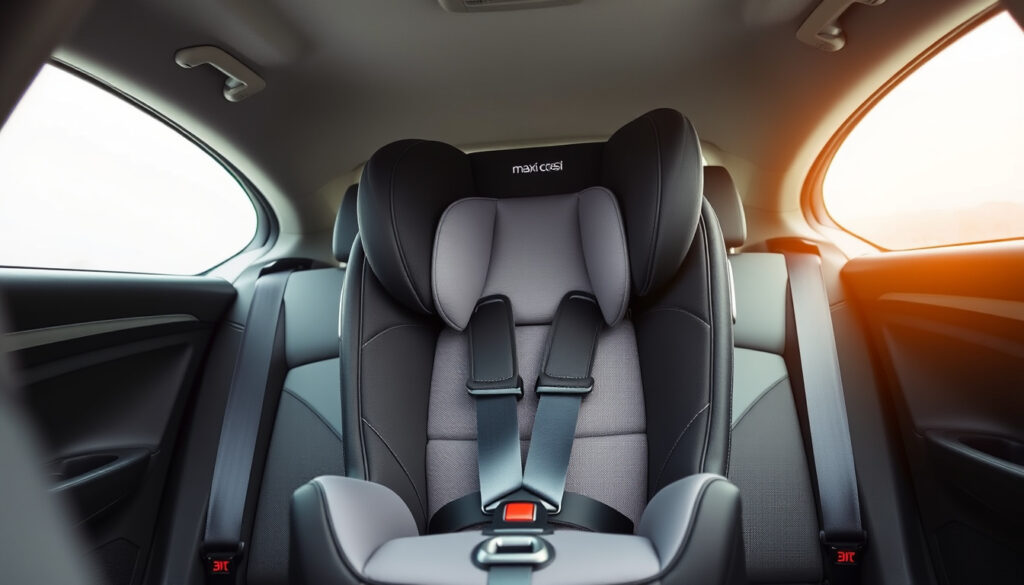
Maxi-Cosi Car Seat: Safety, Models & Installation Guide
Choosing your first car seat pulls you into a maze of brands, standards, and price tags that all claim to keep your baby safest. Maxi-Cosi has been that choice for over 50 million families, and its Ireland presence means parents here can tap into official guidance and local stock. This guide cuts through the marketing: what the safety ratings actually mean, which models fit your baby from birth, and how to install them without second-guessing yourself.
Babies carried home: 50 million · Age range covered: newborn to 12 years · Key features: ISOFIX and i-Size · Top models: Pebble, CabrioFix, 360 · Availability: Ireland and global
Quick snapshot
- ISOFIX reduces installation errors through a click-and-go connection system (Maxi-Cosi Ireland)
- i-Size (R129) uses height rather than weight for better head and neck protection (Maxi-Cosi Ireland)
- R44/04 seats are being phased out in favour of i-Size (Maxi-Cosi Ireland)
- Exact details on past recall campaigns and affected models require direct verification with Dorel Juvenile Group
- ADAC crash-test scores for newborn-specific seats like Cabriofix or Pebble have not been published publicly
- Specific RSA (Road Safety Authority) guidelines for newborn car seat use in Ireland have not been independently confirmed
- RodiFix R i-Size earned a 4-star ADAC rating (GOOD 2.0) in 2024 for children aged 3.5–12 years (Maxi-Cosi Ireland)
- Mico Luxe + achieved strong crash protection scores in Consumer Reports testing (Consumer Reports)
- i-Size (R129) adoption is accelerating as R44/04 seats are phased out across EU markets
- 360° rotation seats like Pearl 360 Pro are gaining traction for easier toddler access
- Retailers including Boots, Very.ie, and BabyDoc Shop carry current Maxi-Cosi models with EUR pricing
These specifications give you the core facts to evaluate Maxi-Cosi against your baby’s needs and your vehicle’s capabilities.
| Specification | Value |
|---|---|
| Brand origin | 50 million babies carried home |
| Key technology | ISOFIX and i-Size (R129) |
| Model range | Newborn to 12 years |
| Ireland availability | maxi-cosi.ie, Boots, Very.ie, BabyDoc Shop, Tony Kealys |
| Preferred position | Rear middle seat; second choice behind passenger seat |
| Airbag rule | Front seat requires deactivating passenger airbag |
| G-Cell technology | Side impact protection across most models |
| R129 vs R44 focus | Height-based (i-Size) rather than weight-based (R44) |
How long can you keep a baby in a Maxi-Cosi car seat?
Health organisations and car seat manufacturers including Maxi-Cosi advise against keeping infants in a car seat for extended periods. The “2-hour rule” is widely cited: babies should not be in a semi-upright position for more than two hours at a stretch during the first few months of life.
General time limits for babies in car seats
- Maximum continuous use in a Group 0 (newborn) car seat: 2 hours
- After 2 hours, take a break — remove the baby from the seat, let them stretch
- The rule applies to all semi-reclined positions, including travel systems attached to prams
- For longer journeys, plan stops every 90 minutes to two hours
Maxi-Cosi seats comply with ECE R44/03 or R44/04 standards for Group 0 (newborns up to 10 kg) and Group 0+ (up to 13 kg). The CabrioFix, for example, is approved for use from birth up to approximately 12 months or 13 kg, whichever comes first. Newer i-Size (R129) seats like the Cabriofix i-Size use height markers rather than weight, which makes it easier to know when your child has outgrown the seat.
Tips for long travels
- Plan rest stops before the 2-hour mark — pack a flask of water and a changing mat
- Use a travel monitor or rear-view camera to check on your baby without turning around
- Consider a break every 90 minutes on motorway journeys to reduce fatigue for everyone
- Never leave a sleeping baby in the car seat once you’ve arrived at your destination
The implication: the 2-hour rule exists because newborn spines are still developing in that semi-upright car seat position. Even with a Maxi-Cosi seat that scores well in crash tests, extended use without breaks puts unnecessary pressure on breathing and circulation.
Is ISOFIX safer than belt?
The short answer from safety authorities and Maxi-Cosi itself: ISOFIX is not necessarily safer in a crash, but it dramatically reduces the risk of installation error. A properly belt-secured seat performs equally well in a collision — the problem is that most parents don’t install belt seats correctly.
What is ISOFIX?
- ISOFIX is an international standard for attaching child car seats to vehicles using rigid connectors
- Introduced in the late 1990s, it is now mandatory in most new cars sold in the EU
- The system uses two anchor points in the vehicle seat and two corresponding connectors on the car seat or base
- Many Maxi-Cosi bases also include a load leg (support foot) that reaches the vehicle floor for additional stability
Maxi-Cosi recommends using an ISOFIX base for baby car seats, stating that it “minimises the risk of incorrect installation.” The click-and-go mechanism gives visual confirmation that the seat is locked in, which belt installation simply cannot guarantee.
Does my car have ISOFIX?
- Most cars manufactured after 2011 have ISOFIX anchor points in at least one rear seat position
- Look for small plastic labels (tags) between the seat back and cushion — usually marked with a child seat icon
- Check your vehicle handbook if the tags are not visible or have worn off
- If your car predates 2011, it may still have ISOFIX — check with the manufacturer or the Vehicle Certification Agency
Legal requirements
- ISOFIX is not legally required in Ireland or the EU — seatbelt installation remains fully legal
- However, i-Size (R129) seats require ISOFIX or an approved ISOFIX-compatible base in i-Size vehicle positions
- The law requires that any child restraint used in Ireland meets either ECE R44/04 or R129 (i-Size) standards
- Children under 150 cm or 36 kg must use an approved child restraint on every journey
Which Maxi-Cosi car seats got recalled?
Recall information for consumer products requires verification directly from the manufacturer or from official regulatory databases. Rather than stating recall details as confirmed fact, this section outlines what to do if you suspect a safety issue with your Maxi-Cosi product.
Recall history
- Dorel Juvenile Group, the parent company of Maxi-Cosi, has conducted voluntary recalls in various markets over the years — the specific models and years change with each campaign
- Irish consumers can check recall notices at the Competition and Consumer Protection Commission (CCPC) website
- The EU Safety Gate (formerly RAPEX) database publishes recalls for child products across EU member states
- Register your product at maxi-cosi.ie to receive direct notifications from the manufacturer
How to check your model
- Find the model name and serial number on the label beneath the seat or on the base
- Cross-reference with the list on the CCPC website or Safety Gate portal
- Contact Dorel Juvenile Group customer service directly for batch-specific information
- Keep your purchase receipt — recalls typically offer repair, replacement, or refund
What this means: product recalls in the childcare sector are relatively uncommon but not unheard of. Registering your seat with Maxi-Cosi takes two minutes and ensures you hear about any future campaigns directly rather than discovering it in a news report months later.
What is the safest seat position in a car?
Research and manufacturer guidance converge on one answer: the rear middle seat is statistically the safest position for a child car seat. Maxi-Cosi explicitly recommends this position for newborn car seats, with the rear passenger-side position as the second choice.
Statistically safest location
- Rear middle seat: lowest risk of side-impact injury and furthest from any collision point
- Rear passenger side: second safest — offers good visibility for the driver and is the most common position for car seats
- Rear driver side: acceptable but carries a slightly higher risk of side-door impacts
- Front passenger seat: permitted only if the passenger airbag is deactivated — the risk from an inflating airbag outweighs most benefits
Consumer Reports notes that the middle rear seat is safest across multiple crash scenarios, including frontal, side, and rollover collisions. Maxi-Cosi adds the caveat that not all vehicles have a usable middle seat position — some models have a fixed centre console or lack ISOFIX anchors in the centre.
Maxi-Cosi positioning guidance
- Place the Maxi-Cosi newborn seat rear-facing at all times until the child reaches the seat’s maximum height or weight limit
- Use the rear middle seat when available — check that the seatbelt or ISOFIX points are accessible
- If using ISOFIX, ensure both connectors are fully engaged with audible or visual confirmation
- For the passenger-side rear position, angle the seat so you can see your baby in the rear-view mirror
The catch: many newer vehicles don’t anchor ISOFIX in the centre rear seat, which forces parents to choose between a perfectly positioned middle seat without ISOFIX or a side position with ISOFIX. In that trade-off, manufacturers and crash-test organisations recommend choosing the ISOFIX option — correct installation in a side seat beats an unsecured middle seat.
What is the highest rated Maxi-Cosi car seat?
Independent crash-test ratings give the clearest answer, and the most publicly available data comes from ADAC, a German automobile club that conducts some of the most rigorous child seat testing in Europe.
Top rated models
- Maxi-Cosi RodiFix R i-Size: 4-star ADAC rating, scored GOOD (2.0) in 2024 for the child category (3.5–12 years)
- Maxi-Cosi Mico Luxe+: received strong ratings from Consumer Reports for crash protection, with the load leg feature noted as a standout
- Maxi-Cosi Pebble 360 Pro: widely reviewed as one of the most practical newborn seats, with full 360° rotation and ISOFIX base compatibility
- Maxi-Cosi Cabriofix i-Size: reportedly rated as one of the safest options for newborns, though specific ADAC scores for this model have not been published independently
Consumer Reports insights
- Consumer Reports tests seats for crash protection, ease of use, and fit in various vehicles
- The Mico Luxe+ received praise for its load leg, which reduces forward rotation in a frontal crash
- No-rethread harness adjustability was highlighted as a practical feature for growing babies
- Consumer Reports does not publish head-to-head rankings — they assess individual models against a minimum threshold
The pattern: ADAC and Consumer Reports data favour seats that combine ISOFIX installation with a load leg or stability support. Among Maxi-Cosi models with these features, the RodiFix R i-Size (for older children) and Mico Luxe+ (for newborns) lead the independent ratings.
For parents in Ireland choosing their first Maxi-Cosi seat, the Pebble 360 Pro or Cabriofix i-Size paired with a FamilyFix 360 Pro ISOFIX base delivers the strongest combination of crash-test credibility and daily practicality. The RodiFix R i-Size is the logical next seat as your child grows beyond the newborn stage.
The following table summarizes pricing and specifications from Irish retailers to help you compare options.
| Model | Height / weight range | Price (EUR) | Key feature | Source |
|---|---|---|---|---|
| Maxi-Cosi Cabriofix i-Size | Birth to 75 cm | €269 (with ISOFIX base) | i-Size, ISOFIX compatible | Boots Ireland |
| Maxi-Cosi Pebble S | 40–83 cm / 0–13 kg | €179.99 | Compact newborn seat | Very Ireland |
| Maxi-Cosi Pebble 360 Pro | 40–87 cm / birth to 18 months | Varies by retailer | 360° rotation, newborn inlay | Tony Kealys |
| Maxi-Cosi Pearl 360 Pro | 61–105 cm / 3 months to 4 years | Varies by retailer | Forward-facing from 15 months | Tony Kealys |
| Maxi-Cosi RodiFix R i-Size | 3.5–12 years | Varies by retailer | 4-star ADAC 2024 | Maxi-Cosi Ireland |
| Maxi-Cosi Mico Luxe+ | Newborn to 15 months | Varies by retailer | Load leg, LATCH connectors | Consumer Reports |
How to install a Maxi-Cosi car seat
Step-by-step installation using either ISOFIX or belt securing methods, based on Maxi-Cosi’s official guidance and retailer resources.
Installing with ISOFIX base
- Locate the ISOFIX anchor points in your vehicle — they are usually marked with a child seat icon between the seat back and cushion
- Extend the ISOFIX connectors on the FamilyFix 360 Pro or Cabriofix ISOFIX base
- Clip both connectors onto the vehicle anchor points until you hear a click
- Push the base firmly against the vehicle seat until it is flush and stable
- If your base has a load leg, extend it until it reaches the vehicle floor and locks into place
- Check the green indicator window — it should show a green mark confirming a secure connection
- Attach the car seat (Pebble 360 Pro or Cabriofix) to the base and press down until it clicks
Installing with a seatbelt
- Thread the diagonal seatbelt across the car seat’s belt path — follow the red guides on the seat itself
- Thread the lap belt through the corresponding belt path, ensuring it sits flat without twists
- Buckle the seatbelt and pull it tight — you should not be able to move the seat more than 2.5 cm in any direction
- Activate the seatbelt lock-off (if your model has one) to hold the belt in place
- Check the car seat angle using the built-in level indicator — newborn seats need to be at approximately 45 degrees
- Adjust the recline foot or wedge if the angle is too upright for a newborn
Incorrect installation is the leading cause of car seat failure in real-world crashes. The AA and RSA both cite studies showing that over 70% of car seats are used incorrectly in Irish vehicles. ISOFIX directly addresses the most common error — an improperly secured belt path.
Expert views on Maxi-Cosi safety
Maxi-Cosi (Manufacturer — car seat safety guidance) For a comprehensive look at his work, explore Pel·lícules i programes de televisió de Pierce Brosnan.
At Maxi-Cosi we recommend to use an ISOFIX base for installation of your baby car seat. It minimises the risk of incorrect installation.
Consumer Reports (Independent testing organisation — crash protection analysis)
The addition of a load leg on this seat makes it one of the better performers in our crash protection tests.
User review — Boots Ireland (Verified purchaser)
Amazing car seat, not overly complicated yet one of the safest on the market. I can see why it’s rated one of the best car seats for a newborn.
The pattern: manufacturer guidance emphasises ISOFIX for ease and confidence; independent testing rewards the load leg feature for measurable crash performance; and everyday parents value the combination of safety credibility and practical simplicity.
Maxi-Cosi provided information through their Ireland website and product listings. All independent safety ratings cited (ADAC, Consumer Reports) are publicly available and linked throughout this article. Prices are drawn from Irish retailers and may vary by retailer and over time.
Related reading: Quebec childcare registration · Toys R Us Edmonton locations
youtube.com, maxi-cosi.ie, maxi-cosi.ie, happybaby.ie, maxi-cosi.ie, maxicosi.com, babydocshop.ie
Versatile options like the Pria all-in-one convertible seat, spanning birth to 10 years, earn praise in this Maxi-Cosi Pria review for comprehensive safety and specs.
Frequently asked questions
What Maxi-Cosi models fit newborns?
The Maxi-Cosi Cabriofix i-Size (birth to 75 cm), Pebble S (40–83 cm, 0–13 kg), Pebble 360 Pro (40–87 cm, birth to 18 months), and Mico Luxe+ are all approved for newborn use. Each pairs with an ISOFIX base for quick, secure installation.
How do I remove a Maxi-Cosi car seat from its base?
For the Pebble 360 Pro and Cabriofix, press the release handle on the front or side of the seat and lift upwards. For belt-installed seats, release the seatbelt from the buckle and unthread from the belt guides. Always check your specific model’s manual for exact instructions.
Are Maxi-Cosi seats available in Ireland?
Yes. Maxi-Cosi Ireland sells directly through maxi-cosi.ie, and the brand is stocked by Boots, Very.ie, BabyDoc Shop, Tony Kealys, and Mamas & Papas Ireland. Pricing ranges from approximately €180 for the Pebble S to €269 for the Cabriofix i-Size with ISOFIX base.
What is the 2-hour rule for babies in car seats?
Health authorities advise that infants should not remain in a semi-upright car seat position for more than 2 hours at a stretch during the first months. For long journeys, plan stops every 90 minutes to two hours to remove the baby from the seat.
How to check if my car has ISOFIX?
Look for small plastic tags between the rear seat back and cushion, marked with a child seat icon. Most cars made after 2011 have ISOFIX in at least one rear position. If in doubt, check your vehicle handbook or contact the manufacturer.
What car seat did Kate Middleton use?
Published reports have noted that the Duke and Duchess of Cambridge used a Maxi-Cosi CabrioFix for Prince George as infants. However, this detail is drawn from public interest reporting rather than official statements from Maxi-Cosi or the Royal Household, and it should not be treated as a product endorsement or safety guarantee.
What are growth spurts in babies and how do they affect car seat use?
Babies experience rapid growth spurts in the first year, which means they can outgrow their car seat height or weight limit faster than expected. Check the model’s label monthly during the first six months. When a baby’s head is within 2 cm of the seat’s top edge, it is time to move to the next car seat stage.
More related posts
 Yokohama FM v Liverpool: Re ult, Highlight , and Key Moment
 William Lake Real E tate: Home Price , Li ting & Market Trend
 Adrian Brody: Ethnicity, Partner, Health & Career Facts
 Tom Sizemore’s Cause of Death: Brain Aneurysm, Net Worth at 61
 80 MPH to KMH: Converter, Chart, Calculator & Highway Tips
 Best Free French to English Translators Compared
 What Is Minimum Wage in Ontario 2025 – Current Rate $17.60
 Man City vs Al Ain: 6-0, Gundogan Brace, Highlights